Can one congressman survive Trump, AIPAC, and the GOP establishment
A lone dissenter in Trump’s GOP faces a billion-dollar political machine
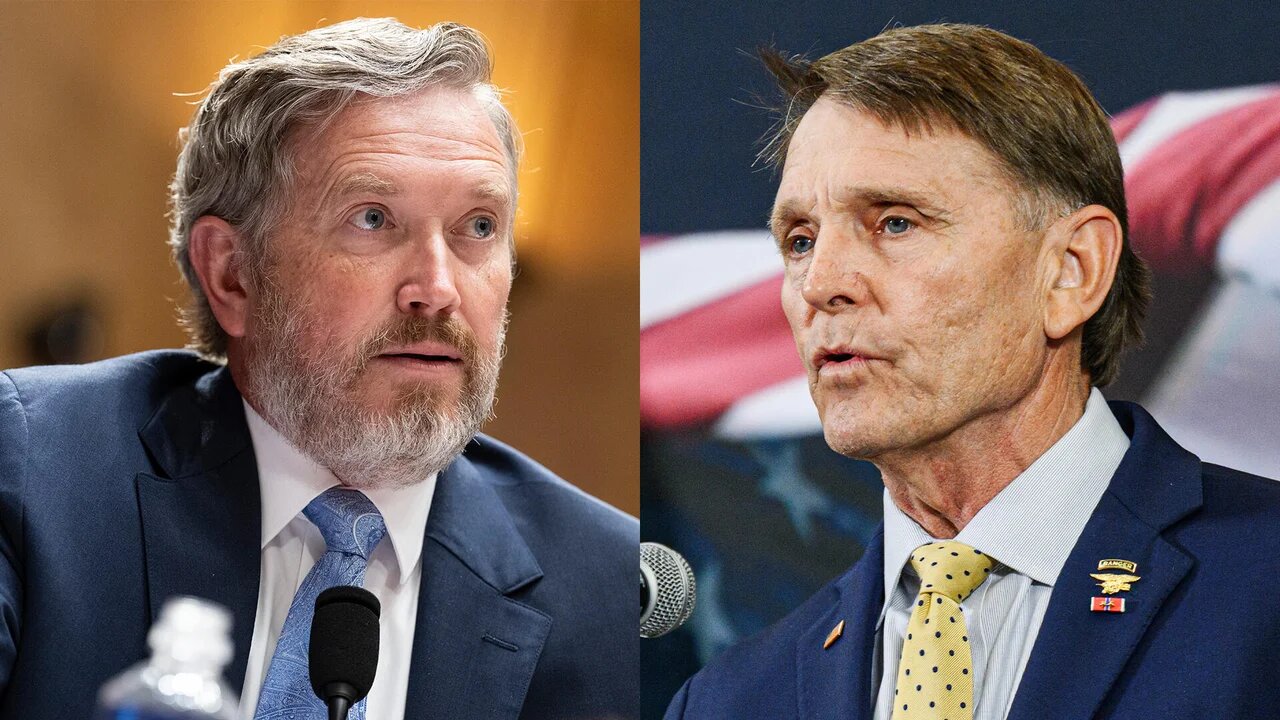
TEHRAN - In one of the most sensitive moments in contemporary American politics, in the state of Kentucky, a member of Congress is fighting a battle that has gone far beyond a local election. It is a struggle in which the sitting President of the United States, the largest conservative financial networks, and some of the most powerful foreign-policy lobbying groups in the world are all aligned on one side, while on the other stands a single figure: Thomas Massie.
He is the same lawmaker who, in a controversial interview with Tucker Carlson, said every member of Congress has a kind of “hidden representative” from AIPAC, the largest pro-Israel lobbying organization in the United States, a political “nursemaid,” as he mockingly described it, whose job is to ensure voting behavior aligns with Israeli interests. That single remark acted like a spark in dry grass, igniting a broader political conflict that has now exploded into one of the most expensive and contentious primary elections in American history.
What appears on the surface to be a straightforward contest between Thomas Massie and Trump-backed challenger Ed Gallrein has, in reality, become an unofficial referendum on the future of the Republican Party. The race is no longer just about a congressional seat. It is about whether there is still space within the GOP for independent dissent against Donald Trump, and whether criticism of Israel’s foreign policy and influence networks remains politically tolerable within the American power structure. These two questions alone have transformed a local primary into a national political battlefield.
Trump is not merely a participant in this contest; he is effectively the stage on which it is being fought. Over recent months, he has deployed his political and media power in an unusually aggressive manner to purge intra-party dissent. From Senator Bill Cassidy in Louisiana to multiple state legislators in Indiana, the pattern has been consistent: Trump endorses challengers, channels millions in outside spending, and publicly attacks opponents on social media. Within this environment, Thomas Massie has emerged as one of the very few Republican figures not only resisting Trump, but directly challenging him.
Massie occupies a unique position within the Republican coalition. He is not a conventional critic, but a libertarian-leaning Republican with strong anti-war, anti-interventionist, and fiscally conservative views. He has repeatedly opposed major spending packages backed by the GOP leadership, including Trump’s own tax and budget proposals. On foreign policy, particularly regarding Iran, Massie has consistently diverged from mainstream Republican orthodoxy. He has argued in favor of restricting presidential war powers and limiting unilateral military action, warning that the executive branch has become too dominant in decisions that should belong to Congress.
In Massie’s view, American military intervention in the Middle East is not just a strategic mistake but a structural failure that weakens U.S. national security while draining domestic economic capacity. He has repeatedly argued that escalation with Iran, especially rhetoric involving regime change or pre-emptive strikes does not enhance deterrence but instead increases the risk of a broader regional war that could entangle the United States for years. For Massie, the experiences of Iraq and Afghanistan are not templates to be repeated but warnings to be heeded.
He has also attempted, at various points, to introduce legislation aimed at reasserting congressional authority over war powers, particularly in relation to military actions involving Iran. In doing so, he has positioned himself against a bipartisan foreign-policy consensus that traditionally grants broad discretion to the president in matters of military engagement. His stance has led critics to view him as unpredictable or disruptive, while supporters see him as one of the few remaining voices willing to challenge the cycle of endless military intervention.
This combination of positions has placed Massie in an unusually exposed political position. He finds himself simultaneously in conflict with Republican leadership, Trump personally, and a network of powerful lobbying institutions that have long been embedded in American foreign policy decision-making. It is precisely this intersection of tensions that has made his primary race one of the most expensive in U.S. history, with over $30 million spent on advertising and campaign operations, much of it driven by super PACs, pro-Israel advocacy groups, and Trump-aligned political networks.
Trump has made no effort to conceal his hostility. He has called Massie “the worst and most unreliable Republican Congressman in the history of our Country,” labeled him a “traitor,” and urged voters to “get him out of politics.” In an unusual escalation, members of Trump’s administration, including senior officials, have appeared at campaign events in Kentucky to support Massie’s opponent, an action that many observers interpret as blurring the traditional boundaries between military institutions and partisan politics.
At the same time, pro-Israel lobbying organizations have entered the race with unprecedented force. Groups such as AIPAC and affiliated political action committees have spent millions targeting Massie. The central reason is not simply ideological disagreement, but the fact that Massie has openly questioned the extent of foreign lobbying influence in U.S. domestic politics. He has criticized both military aid to Israel and the broader structure of lobbying influence in Washington. From the perspective of these organizations, his positions are not merely dissenting views but a challenge to a long-standing bipartisan consensus on U.S.-Israel relations.
Importantly, this battle is not purely personal. It reflects a deeper transformation within the Republican Party itself. For decades, support for Israel was one of the few stable bipartisan pillars in American politics. However, in recent years, particularly among younger conservatives and non-traditional media ecosystems, this consensus has begun to fracture. The rise of the “America First” movement, which emphasizes reduced foreign intervention and prioritization of domestic interests, has created ideological space for figures like Massie to question long-established foreign-policy assumptions.
The scale of money involved in this race also highlights a broader structural reality in American politics: elections are increasingly shaped not just by candidates, but by competing financial and ideological networks. When a single primary election can attract more than $30 million in spending, it is clear that the contest is no longer local. It has become a proxy war for broader political forces, including the White House, party leadership, and international lobbying interests.
At the social level, generational divides are becoming increasingly visible. Younger Republican voters tend to be more skeptical of foreign military engagements and more open to non-interventionist foreign policy positions. Older voters, by contrast, remain more aligned with traditional Republican orthodoxy and loyalty to Trump. This generational split could prove decisive in shaping the long-term trajectory of the party, especially if figures like Massie continue to mobilize younger constituencies.
Yet even if Massie were to win this race, his position within the party would remain fragile. The current Republican power structure is heavily centralized around Trump’s influence, meaning that ideological independence, even after electoral victory, can still result in political isolation. Conversely, if he loses, the message sent to the broader party would be unambiguous: dissent from Trump’s leadership and criticism of entrenched foreign-policy interests carries a high political cost, potentially leading to removal from the center of power.
At a more systemic level, this race illustrates how American politics is entering a phase in which the boundaries between domestic governance, foreign lobbying influence, party loyalty, and individual political independence are increasingly blurred. Trump is not simply a president or party leader in this context; he is an organizing force reshaping the internal structure of Republican politics. Pro-Israel lobbying groups, meanwhile, function not merely as external actors but as embedded components of the domestic political ecosystem, capable of influencing electoral outcomes directly.
Ultimately, the contest between Thomas Massie and Ed Gallrein is far more than a standard political race. It is a stress test for the Republican Party, for the future of American foreign policy, and for the evolving definition of political loyalty in the United States. On one side stands an older model of party politics, centralized, leadership-driven, and aligned with traditional foreign alliances. On the other hand stands an emerging current that prioritizes independence, skepticism of power, and a redefinition of national priorities.
Whatever the outcome, one thing is already clear: the Republican Party is no longer the party it once was, and American politics itself is entering a phase where loyalty, money, ideology, and foreign influence are more tightly interwoven than ever before. And Thomas Massie—whether he wins or loses—has become one of the central figures in that transformation.
Leave a Comment